Updates
The Next Frontiers Symposium Continues
July 28, 2026

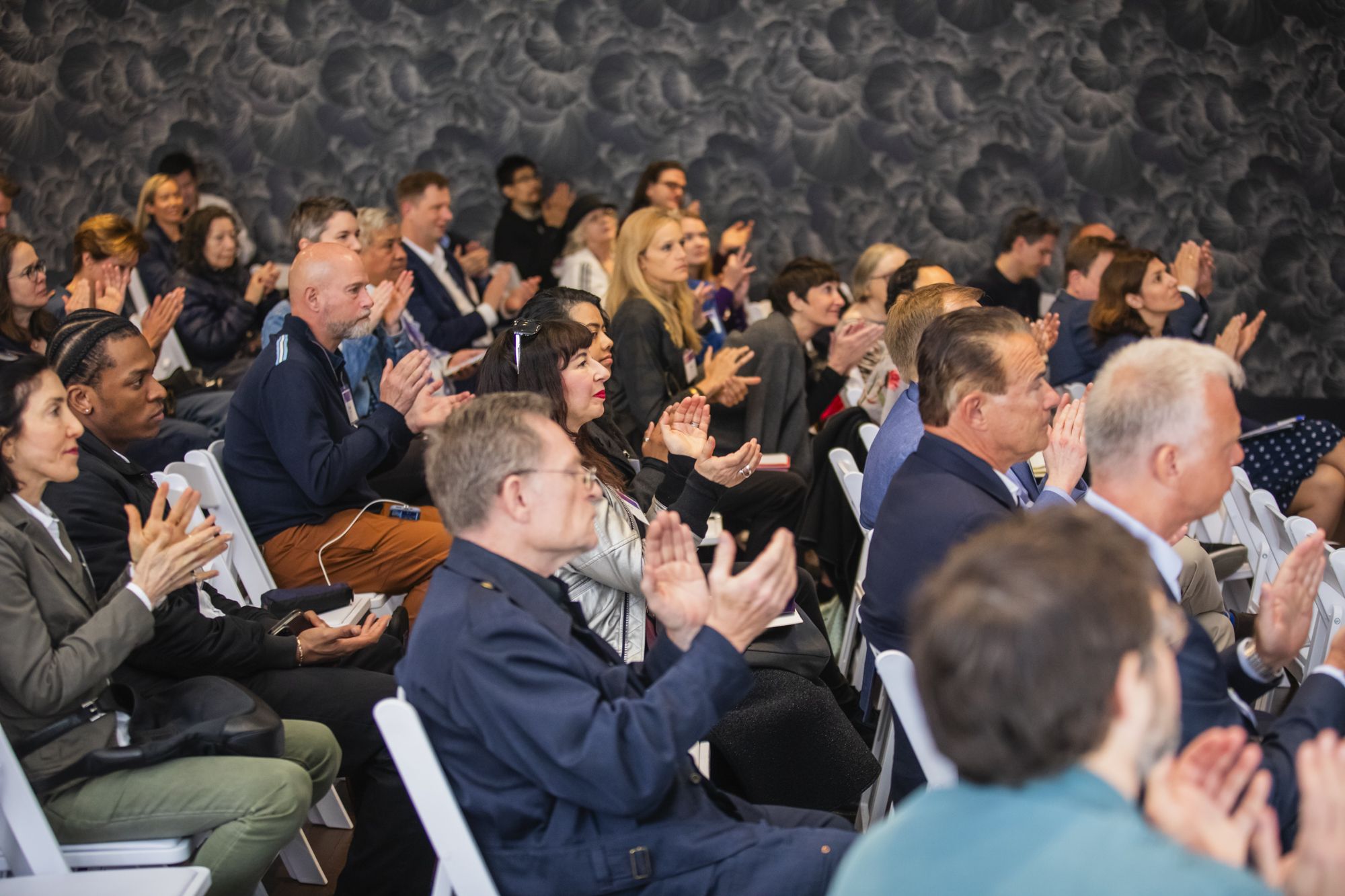
In May 2026, 1014 launched The Next Frontiers Symposium, bringing together leading voices from the United States and Germany to explore how culture, science, technology, business, politics, and design will shape the future of our societies. Marking the 250th anniversary of the United States, the two-part symposium reflects on the enduring idea of the "New Frontier"—first articulated by President John F. Kennedy as a call to exploration, innovation, and social progress, and later echoed by President Ronald Reagan as a vision of a nation continually renewed by the aspirations of its people.
Building on the shared history and enduring partnership between the United States and Germany, Part I explored the ideas, collaborations, and emerging frontiers that will define the decades ahead. From architecture and immersive storytelling to space governance, democracy, artificial intelligence, and planetary resilience, the symposium demonstrated that the future is not something we simply anticipate, it is something we create together.
This fall, Next Frontiers II: Delivering the Next Frontiers shifts the conversation from vision to implementation. If Part I asked what's next?, Part II asks how do we get from here to there?
Across three immersive and thematically connected Night Labs, leading experts from both sides of the Atlantic will explore how discoveries are translated into tangible outcomes. From intelligent materials and quantum computing to synthetic biology, neuroscience, AI, and human performance, the series examines how ideas become products, technologies, and experiences that reshape the way we build, live, and perform.
THE PROGRAM:
NIGHT LAB I | MATERIALS OF TOMORROW (The Building Frontiers)
Exploring how matter becomes intelligent, adaptive, and alive.
What happens when we stop asking materials to simply perform—and start designing them to respond, transform, and become part of the process?
Night Lab I takes us inside the laboratories and workshops where the boundary between the living and the built is dissolving. From timber that can harness moisture to transform its own shape, to programmable materials that can self-assemble and adapt, to new generations of concrete designed to reduce carbon emissions and rethink how we build, we are witnessing a fundamental shift in the way materials are conceived, made, and used.
This program is a part of Archtober, NYC's Architecture + Design Month
NIGHT LAB II | ENGINEERED EVOLUTION (The Bio-Human Frontiers)
Exploring how biology, materials, and computation reshape the human body and mind.
What if materials become a bridge between biology and computation? How do we redesign the body and the mind? What happens when evolution moves from the natural world into the design studio?
With Night Lab II, we are shifting from “building around us” to “building within us”. The segment explores how synthetic biology and neuroscience are merging to augment human capability and perception.
We enter a territory where the body meets neural interfaces, conductive biomaterials become implantable bioelectronics, and brain-computer interfaces begin to blur the boundaries between prosthetics, sensation, and perception.
NIGHT LAB III | ENHANCED PERFORMANCE (The Human Potential Frontiers)
Exploring how data, AI, materials, and neuroscience redefine human capability.
What happens when human performance is engineered? How can the microbiome, AI, advanced materials, and prosthetic technologies change the way we train, recover, move, and perform? And what happens when the limits of the human body become a starting point for innovation?
With Night Lab III, we move from building within us to performing beyond our limits. The session explores how breakthroughs in biology, materials science, data, and technology are opening new possibilities for human performance—from harnessing the microbiome of elite athletes to developing advanced prosthetics and materials designed to extend what the human body can do.
Thank you to our Part II program partners, Vitra and DWIH. Thank you also to Campus OWL, Deutsches Haus at NYU, Goethe-Institut New York, Heidelberg University Association, UAS7, University of Cologne New York Office, The University of Freiburg, and UA Ruhr North America for their support.