.jpg)

.png)
Science, Health, and Society: Trust, Evidence, and Misinformation in Public Discourse
.svg)
.svg)
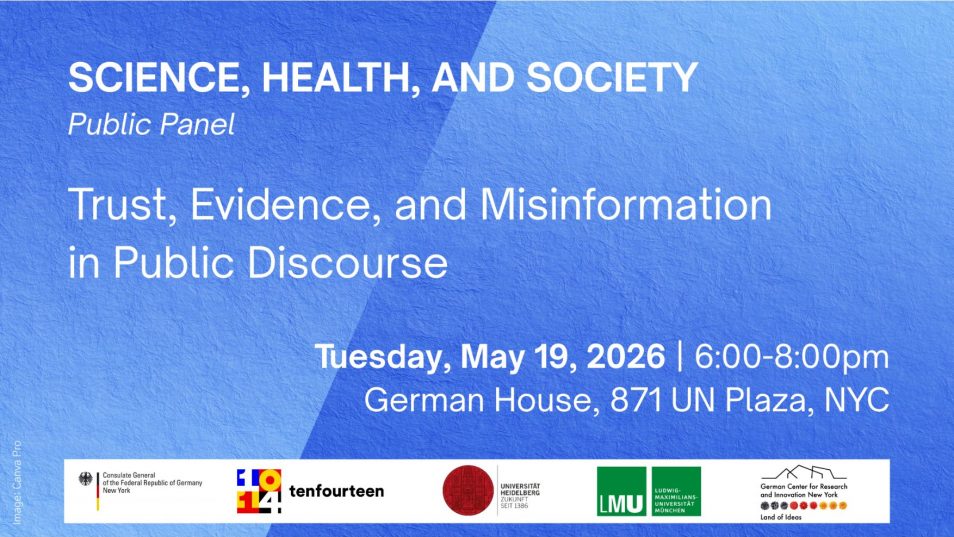
In an age of misinformation and growing challenges to public trust in science, this trans-Atlantic event brings together leading voices from research, journalism, and science communication to discuss how evidence can be included in a public discourse with ever changing rules and technology. Especially in the field of health, a scientifically informed public matters for building resilient, innovative societies.
Speakers include Ellen Horne (New York University), Vivian Trakinski (American Museum of Natural History), and Soren Wheeler (WNYC, Radiolab), Helen Fischer (Heidelberg) and Marvin Fendt (LMU Munich), moderated by Bernhard Goodwin (Munich Science Communication Lab).
The panel brings together five complementary angles on science, health, and public discourse: Ellen Horne addresses how scientifically important topics can be translated into formats that are timely, accessible, and meaningful for broad audiences; Vivian Trakinski highlights the role of immersive, visual, and emotionally engaging communication in making complex science tangible; Soren Wheeler adds the dimension of storytelling and engagement with a podcast audience; Helen Fischer contributes insights from cognitive psychology on misinformation, and metacognition, including how well people understand their own knowledge and knowledge gaps; and Marvin Fendt focuses on experimental work on trust in science and resilience against misinformation. Together, these angles capture how scientific evidence is communicated, experienced, interpreted, trusted, and challenged in society.
Welcome Remarks by Chris Strowa, Director of DWIH and DAAD New York and Lisa Hollenbach, Press & Political Affairs Section, German Consulate General New York.
Biographies

Bernhard Goodwin is a trained communication scholar (2005, LMU) and received a PhD in social sciences from TUM (2011) with a dissertation about science communication in the field of forestry. He returned to LMU’s communication department 2009, responsible for the journalism-degree, international exchange, and department management. Since 2021 he is one of the leaders of the Munich Science Communication Lab and tries to understand how to communicate Planetary Health and other wicked problems. He is interested in the perspective of academic communicators and how science communication affects them.

Marvin Fendt is a PhD candidate in educational psychology at LMU Munich. He is intrigued by the paradox that despite having more access to information than ever before, people often seemingly fail to make well-informed decisions. His work focuses on individual-level interventions against misinformation. Additionally, his research explores the drivers behind misinformation - such as conspiracy beliefs and distrust in established media. He serves as one of the coordinators for EARLI JURE SIG20 and as one of the speakers for the research subsection of PsyComm (science communication in psychology) interest group within the DGPs (German Psychological Society).

Helen Fischer is a cognitive psychologist investigating the role of metacognition, our insight into the reliability and the limits of one's own knowledge for beliefs about politicized science such as climate change or COVID-19. Her work illuminates the importance of metacognition for recognizing one's own errors in reasoning, such as motivated information processing and biased information transfer in social networks. Helen Fischer received her doctorate in cognitive psychology from Heidelberg University in 2016 where she also held postdoc positions on public perception of climate change. In 2019 she received a postdoc fellowship from the German Research Foundation (DFG) and worked at the Stockholm Resilience Center, Sweden, in 2019-20. Helen Fischer was a visiting researcher at the Max Planck Institute for Human Development, Berlin, in 2020-22. Since 2022 she was at the Leibniz Institute for Knowledge Media, Tübingen, and conducted a research stay at the University of Waikato, New Zealand in a project funded by the Fritz Thyssen Foundation. In 2023/24, she held a visiting professorship for Science and Society at the Karlsruhe Institute of Technology (KIT). In 2024, she was accepted into the DFG Heisenberg programme.

Ellen Horne is an audio journalist, artist, producer, and educator, and a producer, writer and story editor for Age of Audio. She produced WNYC's Radiolab from 2003-2015, where she helped shape the show’s development. Her credits also include the series Joy of x, Ponzi Supernova, Admissible, and Lies We Tell. She is an Associate Professor and the Director of the Podcasting and Audio Reportage Master's program at New York University.

Vivian Trakinski is the Senior Director of Science Visualization at the American Museum of Natural History. Vivian joined the Museum in 1999 as a documentary filmmaker, spending more than a decade traveling the globe to create short films about how we study the natural world. More recently, Vivian has been collaborating with scientists, artists, and programmers to produce scientifically accurate and visually compelling data driven experiences for visitors to AMNH’s Immersive venues and exhibition halls.

Soren Wheeler has been at Radiolab for 19 years and is currently the Executive Editor. In addition to reporting and production, Soren oversees management of the show and development of all content. Before Radiolab, he worked science teachers, researched how kids learn science, and co-authored the book Atlas of Science Literacy. He then went on to get a Master’s degree in science writing at Johns Hopkins University. Soren has won awards for production on radio pieces about coincidence and statistics, the periodic table, and the story of a woman waking up from a coma.



In an age of misinformation and growing challenges to public trust in science, this trans-Atlantic event brings together leading voices from research, journalism, and science communication to discuss how evidence can be included in a public discourse with ever changing rules and technology. Especially in the field of health, a scientifically informed public matters for building resilient, innovative societies.
Speakers include Ellen Horne (New York University), Vivian Trakinski (American Museum of Natural History), and Soren Wheeler (WNYC, Radiolab), Helen Fischer (Heidelberg) and Marvin Fendt (LMU Munich), moderated by Bernhard Goodwin (Munich Science Communication Lab).
The panel brings together five complementary angles on science, health, and public discourse: Ellen Horne addresses how scientifically important topics can be translated into formats that are timely, accessible, and meaningful for broad audiences; Vivian Trakinski highlights the role of immersive, visual, and emotionally engaging communication in making complex science tangible; Soren Wheeler adds the dimension of storytelling and engagement with a podcast audience; Helen Fischer contributes insights from cognitive psychology on misinformation, and metacognition, including how well people understand their own knowledge and knowledge gaps; and Marvin Fendt focuses on experimental work on trust in science and resilience against misinformation. Together, these angles capture how scientific evidence is communicated, experienced, interpreted, trusted, and challenged in society.
Welcome Remarks by Chris Strowa, Director of DWIH and DAAD New York and Lisa Hollenbach, Press & Political Affairs Section, German Consulate General New York.
Biographies
Bernhard Goodwin is a trained communication scholar (2005, LMU) and received a PhD in social sciences from TUM (2011) with a dissertation about science communication in the field of forestry. He returned to LMU’s communication department 2009, responsible for the journalism-degree, international exchange, and department management. Since 2021 he is one of the leaders of the Munich Science Communication Lab and tries to understand how to communicate Planetary Health and other wicked problems. He is interested in the perspective of academic communicators and how science communication affects them.
Marvin Fendt is a PhD candidate in educational psychology at LMU Munich. He is intrigued by the paradox that despite having more access to information than ever before, people often seemingly fail to make well-informed decisions. His work focuses on individual-level interventions against misinformation. Additionally, his research explores the drivers behind misinformation - such as conspiracy beliefs and distrust in established media. He serves as one of the coordinators for EARLI JURE SIG20 and as one of the speakers for the research subsection of PsyComm (science communication in psychology) interest group within the DGPs (German Psychological Society).
Helen Fischer is a cognitive psychologist investigating the role of metacognition, our insight into the reliability and the limits of one's own knowledge for beliefs about politicized science such as climate change or COVID-19. Her work illuminates the importance of metacognition for recognizing one's own errors in reasoning, such as motivated information processing and biased information transfer in social networks. Helen Fischer received her doctorate in cognitive psychology from Heidelberg University in 2016 where she also held postdoc positions on public perception of climate change. In 2019 she received a postdoc fellowship from the German Research Foundation (DFG) and worked at the Stockholm Resilience Center, Sweden, in 2019-20. Helen Fischer was a visiting researcher at the Max Planck Institute for Human Development, Berlin, in 2020-22. Since 2022 she was at the Leibniz Institute for Knowledge Media, Tübingen, and conducted a research stay at the University of Waikato, New Zealand in a project funded by the Fritz Thyssen Foundation. In 2023/24, she held a visiting professorship for Science and Society at the Karlsruhe Institute of Technology (KIT). In 2024, she was accepted into the DFG Heisenberg programme.
Ellen Horne is an audio journalist, artist, producer, and educator, and a producer, writer and story editor for Age of Audio. She produced WNYC's Radiolab from 2003-2015, where she helped shape the show’s development. Her credits also include the series Joy of x, Ponzi Supernova, Admissible, and Lies We Tell. She is an Associate Professor and the Director of the Podcasting and Audio Reportage Master's program at New York University.
Vivian Trakinski is the Senior Director of Science Visualization at the American Museum of Natural History. Vivian joined the Museum in 1999 as a documentary filmmaker, spending more than a decade traveling the globe to create short films about how we study the natural world. More recently, Vivian has been collaborating with scientists, artists, and programmers to produce scientifically accurate and visually compelling data driven experiences for visitors to AMNH’s Immersive venues and exhibition halls.
Soren Wheeler has been at Radiolab for 19 years and is currently the Executive Editor. In addition to reporting and production, Soren oversees management of the show and development of all content. Before Radiolab, he worked science teachers, researched how kids learn science, and co-authored the book Atlas of Science Literacy. He then went on to get a Master’s degree in science writing at Johns Hopkins University. Soren has won awards for production on radio pieces about coincidence and statistics, the periodic table, and the story of a woman waking up from a coma.

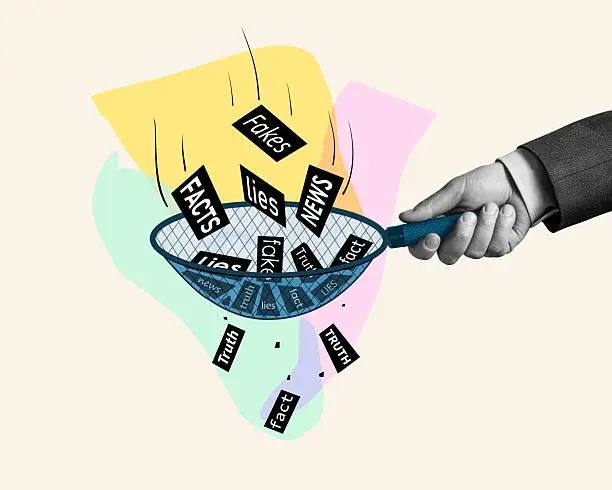
In an age of misinformation and growing challenges to public trust in science, this trans-Atlantic event brings together leading voices from research, journalism, and science communication to discuss how evidence can be included in a public discourse with ever changing rules and technology. Especially in the field of health, a scientifically informed public matters for building resilient, innovative societies.
Speakers include Ellen Horne (New York University), Vivian Trakinski (American Museum of Natural History), and Soren Wheeler (WNYC, Radiolab), Helen Fischer (Heidelberg) and Marvin Fendt (LMU Munich), moderated by Bernhard Goodwin (Munich Science Communication Lab).
The panel brings together five complementary angles on science, health, and public discourse: Ellen Horne addresses how scientifically important topics can be translated into formats that are timely, accessible, and meaningful for broad audiences; Vivian Trakinski highlights the role of immersive, visual, and emotionally engaging communication in making complex science tangible; Soren Wheeler adds the dimension of storytelling and engagement with a podcast audience; Helen Fischer contributes insights from cognitive psychology on misinformation, and metacognition, including how well people understand their own knowledge and knowledge gaps; and Marvin Fendt focuses on experimental work on trust in science and resilience against misinformation. Together, these angles capture how scientific evidence is communicated, experienced, interpreted, trusted, and challenged in society.
Welcome Remarks by Chris Strowa, Director of DWIH and DAAD New York and Lisa Hollenbach, Press & Political Affairs Section, German Consulate General New York.
Biographies
Bernhard Goodwin is a trained communication scholar (2005, LMU) and received a PhD in social sciences from TUM (2011) with a dissertation about science communication in the field of forestry. He returned to LMU’s communication department 2009, responsible for the journalism-degree, international exchange, and department management. Since 2021 he is one of the leaders of the Munich Science Communication Lab and tries to understand how to communicate Planetary Health and other wicked problems. He is interested in the perspective of academic communicators and how science communication affects them.
Marvin Fendt is a PhD candidate in educational psychology at LMU Munich. He is intrigued by the paradox that despite having more access to information than ever before, people often seemingly fail to make well-informed decisions. His work focuses on individual-level interventions against misinformation. Additionally, his research explores the drivers behind misinformation - such as conspiracy beliefs and distrust in established media. He serves as one of the coordinators for EARLI JURE SIG20 and as one of the speakers for the research subsection of PsyComm (science communication in psychology) interest group within the DGPs (German Psychological Society).
Helen Fischer is a cognitive psychologist investigating the role of metacognition, our insight into the reliability and the limits of one's own knowledge for beliefs about politicized science such as climate change or COVID-19. Her work illuminates the importance of metacognition for recognizing one's own errors in reasoning, such as motivated information processing and biased information transfer in social networks. Helen Fischer received her doctorate in cognitive psychology from Heidelberg University in 2016 where she also held postdoc positions on public perception of climate change. In 2019 she received a postdoc fellowship from the German Research Foundation (DFG) and worked at the Stockholm Resilience Center, Sweden, in 2019-20. Helen Fischer was a visiting researcher at the Max Planck Institute for Human Development, Berlin, in 2020-22. Since 2022 she was at the Leibniz Institute for Knowledge Media, Tübingen, and conducted a research stay at the University of Waikato, New Zealand in a project funded by the Fritz Thyssen Foundation. In 2023/24, she held a visiting professorship for Science and Society at the Karlsruhe Institute of Technology (KIT). In 2024, she was accepted into the DFG Heisenberg programme.
Ellen Horne is an audio journalist, artist, producer, and educator, and a producer, writer and story editor for Age of Audio. She produced WNYC's Radiolab from 2003-2015, where she helped shape the show’s development. Her credits also include the series Joy of x, Ponzi Supernova, Admissible, and Lies We Tell. She is an Associate Professor and the Director of the Podcasting and Audio Reportage Master's program at New York University.
Vivian Trakinski is the Senior Director of Science Visualization at the American Museum of Natural History. Vivian joined the Museum in 1999 as a documentary filmmaker, spending more than a decade traveling the globe to create short films about how we study the natural world. More recently, Vivian has been collaborating with scientists, artists, and programmers to produce scientifically accurate and visually compelling data driven experiences for visitors to AMNH’s Immersive venues and exhibition halls.
Soren Wheeler has been at Radiolab for 19 years and is currently the Executive Editor. In addition to reporting and production, Soren oversees management of the show and development of all content. Before Radiolab, he worked science teachers, researched how kids learn science, and co-authored the book Atlas of Science Literacy. He then went on to get a Master’s degree in science writing at Johns Hopkins University. Soren has won awards for production on radio pieces about coincidence and statistics, the periodic table, and the story of a woman waking up from a coma.