.jpg)

.png)
Kafka’s Drawings: Images of the Grotesque and Arabesque
.svg)
.svg)
.png)
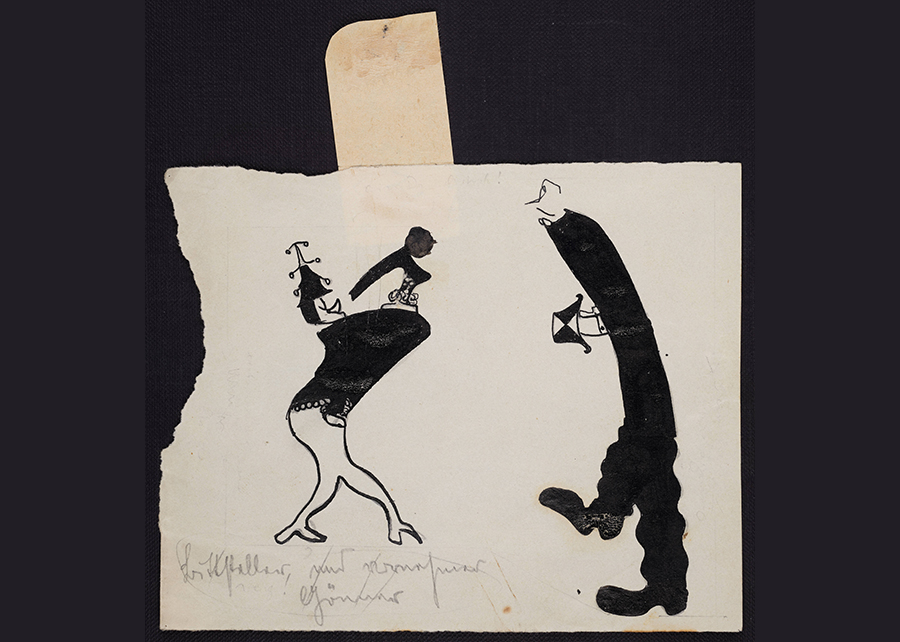
The year 2019 brought a sensational discovery: hundreds of drawings by Franz Kafka that had been kept under lock and key for decades were made accessible. Although Kafka is renowned for his written work, his drawings are evidence of what his literary executor, Max Brod, termed his ‘double talent’. Irresistible and full of fascinating figures, shifting from the realistic to the fantastic, the grotesque, the uncanny, and the carnivalesque, they illuminate a previously unknown side of the quintessential modernist author. Four new and fascinating stories can be told in relation to Kafka’s drawings: the story of their transmission, the story of Kafka’s engagement with the visual arts, the story of Kafka as a draftsman, and the story of his drawing practice in the context of his writing, which implies a complex aesthetic question: How are these drawings to be understood in their own right, yet at the same time as connected to his writing?
About the participants:
Andreas Kilcher is Professor of Literature and Cultural Studies at the Swiss Federal Institute of Technology (ETH) Zurich. He has been a visiting Professor at Princeton University, Stanford University, UC Davis, and Tel Aviv University. His main areas of research are the relationship between literature and knowledge; Jewish literature and culture; and Kabbalah and esotericism. He has published a wide range of monographs, edited volumes, articles, dictionary entries, and reviews in these areas. Kilcher’s book on Franz Kafka’s drawings has been translated into more than ten languages and appeared on several bestseller lists. His most recent book, Kafkas Werkstatt: Der Schriftsteller bei der Arbeit (Kafka’s Workshop: The Writer at Work), has also appeared on bestseller lists. He is currently working on a book about Doctor Faustus.
Paul North is Maurice Natanson Professor of German and Professor of Philosophy at Yale University. He is the author of several books, including The Yield: Kafka’s Atheological Reformation (Stanford 2015), Bizarre Privileged Items in the Universe: The Logic of Likeness (2021), and The Standpoint of Marx’s Capital (expected 2027) . He is co-editor of the new English translation of Karl Marx’s Capital (Volume 1, Princeton, 2024; Volume 2 expected 2028).
Attendance:
While NYU has ended COVID-19 related restrictions and policies, we continue to remind and recommend to members of the NYU community that they stay up-to-date on their boosters and stay home if they feel sick. Masks are always welcome.
Please RSVP for in-person attendance.
Accessibility:
The first floor of Deutsches Haus at NYU, where our auditorium is located and where a majority of our events take place, can be made wheelchair accessible through the use of our ramp. If you would like for a Deutsches Haus staff member to set up this ramp for you, please call our Front Desk at +1 212-998-8660 upon your arrival. For any other accessibility-related questions or concerns, please email us at dhnyu.frontdesk@gmail.com or call us at +1 212-998-8660.
" Kafka’s Drawings: Images of the Grotesque and Arabesque" is funded by the DAAD from funds of the German Federal Foreign Office (AA).






The year 2019 brought a sensational discovery: hundreds of drawings by Franz Kafka that had been kept under lock and key for decades were made accessible. Although Kafka is renowned for his written work, his drawings are evidence of what his literary executor, Max Brod, termed his ‘double talent’. Irresistible and full of fascinating figures, shifting from the realistic to the fantastic, the grotesque, the uncanny, and the carnivalesque, they illuminate a previously unknown side of the quintessential modernist author. Four new and fascinating stories can be told in relation to Kafka’s drawings: the story of their transmission, the story of Kafka’s engagement with the visual arts, the story of Kafka as a draftsman, and the story of his drawing practice in the context of his writing, which implies a complex aesthetic question: How are these drawings to be understood in their own right, yet at the same time as connected to his writing?
About the participants:
Andreas Kilcher is Professor of Literature and Cultural Studies at the Swiss Federal Institute of Technology (ETH) Zurich. He has been a visiting Professor at Princeton University, Stanford University, UC Davis, and Tel Aviv University. His main areas of research are the relationship between literature and knowledge; Jewish literature and culture; and Kabbalah and esotericism. He has published a wide range of monographs, edited volumes, articles, dictionary entries, and reviews in these areas. Kilcher’s book on Franz Kafka’s drawings has been translated into more than ten languages and appeared on several bestseller lists. His most recent book, Kafkas Werkstatt: Der Schriftsteller bei der Arbeit (Kafka’s Workshop: The Writer at Work), has also appeared on bestseller lists. He is currently working on a book about Doctor Faustus.
Paul North is Maurice Natanson Professor of German and Professor of Philosophy at Yale University. He is the author of several books, including The Yield: Kafka’s Atheological Reformation (Stanford 2015), Bizarre Privileged Items in the Universe: The Logic of Likeness (2021), and The Standpoint of Marx’s Capital (expected 2027) . He is co-editor of the new English translation of Karl Marx’s Capital (Volume 1, Princeton, 2024; Volume 2 expected 2028).
Attendance:
While NYU has ended COVID-19 related restrictions and policies, we continue to remind and recommend to members of the NYU community that they stay up-to-date on their boosters and stay home if they feel sick. Masks are always welcome.
Please RSVP for in-person attendance.
Accessibility:
The first floor of Deutsches Haus at NYU, where our auditorium is located and where a majority of our events take place, can be made wheelchair accessible through the use of our ramp. If you would like for a Deutsches Haus staff member to set up this ramp for you, please call our Front Desk at +1 212-998-8660 upon your arrival. For any other accessibility-related questions or concerns, please email us at dhnyu.frontdesk@gmail.com or call us at +1 212-998-8660.
" Kafka’s Drawings: Images of the Grotesque and Arabesque" is funded by the DAAD from funds of the German Federal Foreign Office (AA).

The year 2019 brought a sensational discovery: hundreds of drawings by Franz Kafka that had been kept under lock and key for decades were made accessible. Although Kafka is renowned for his written work, his drawings are evidence of what his literary executor, Max Brod, termed his ‘double talent’. Irresistible and full of fascinating figures, shifting from the realistic to the fantastic, the grotesque, the uncanny, and the carnivalesque, they illuminate a previously unknown side of the quintessential modernist author. Four new and fascinating stories can be told in relation to Kafka’s drawings: the story of their transmission, the story of Kafka’s engagement with the visual arts, the story of Kafka as a draftsman, and the story of his drawing practice in the context of his writing, which implies a complex aesthetic question: How are these drawings to be understood in their own right, yet at the same time as connected to his writing?
About the participants:
Andreas Kilcher is Professor of Literature and Cultural Studies at the Swiss Federal Institute of Technology (ETH) Zurich. He has been a visiting Professor at Princeton University, Stanford University, UC Davis, and Tel Aviv University. His main areas of research are the relationship between literature and knowledge; Jewish literature and culture; and Kabbalah and esotericism. He has published a wide range of monographs, edited volumes, articles, dictionary entries, and reviews in these areas. Kilcher’s book on Franz Kafka’s drawings has been translated into more than ten languages and appeared on several bestseller lists. His most recent book, Kafkas Werkstatt: Der Schriftsteller bei der Arbeit (Kafka’s Workshop: The Writer at Work), has also appeared on bestseller lists. He is currently working on a book about Doctor Faustus.
Paul North is Maurice Natanson Professor of German and Professor of Philosophy at Yale University. He is the author of several books, including The Yield: Kafka’s Atheological Reformation (Stanford 2015), Bizarre Privileged Items in the Universe: The Logic of Likeness (2021), and The Standpoint of Marx’s Capital (expected 2027) . He is co-editor of the new English translation of Karl Marx’s Capital (Volume 1, Princeton, 2024; Volume 2 expected 2028).
Attendance:
While NYU has ended COVID-19 related restrictions and policies, we continue to remind and recommend to members of the NYU community that they stay up-to-date on their boosters and stay home if they feel sick. Masks are always welcome.
Please RSVP for in-person attendance.
Accessibility:
The first floor of Deutsches Haus at NYU, where our auditorium is located and where a majority of our events take place, can be made wheelchair accessible through the use of our ramp. If you would like for a Deutsches Haus staff member to set up this ramp for you, please call our Front Desk at +1 212-998-8660 upon your arrival. For any other accessibility-related questions or concerns, please email us at dhnyu.frontdesk@gmail.com or call us at +1 212-998-8660.
" Kafka’s Drawings: Images of the Grotesque and Arabesque" is funded by the DAAD from funds of the German Federal Foreign Office (AA).